Enterprise Mine
The OutlawsThe Enterprise Mine is a derelict silver-mining complex high above Roily, where a steep, nearly forgotten mountain route brings together the region’s mining past, Red Muldoon’s ranching life, and the town’s economic decline. Its broken buildings and rusting machinery are not merely remnants of an industry: they mark the failure of a costly investment and the fading of the boom that once sustained Roily.
Setting and Landscape
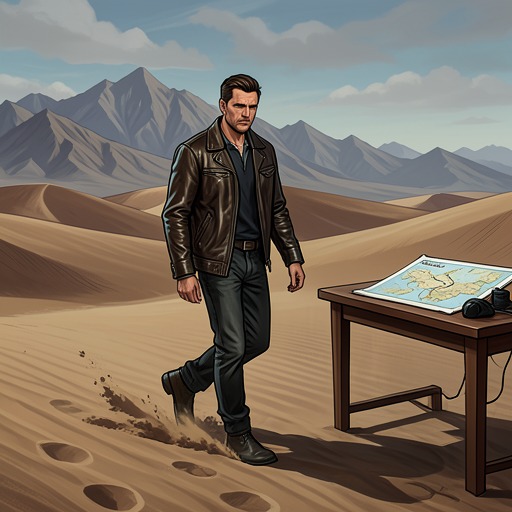
The mine stands close to timberline, above a climb that becomes easier only after the trail enters a narrow canyon. The high ground has little timber beyond scattered, wind-bent trees, but the grass is good. Red Muldoon brought cattle there during the summer, though the herd moved up late because the grass was slow to grow. He returned several times each summer to check on the animals, sometimes taking his young daughter, Kate, with him. The mine’s surroundings thus served not only as a site of extraction but also as seasonal grazing country within Red’s ranching life.
The old access road had been altered where it left the newer road, its entrance obscured by grading and cut earth. It had not been used for fifteen years or more and had likely dwindled to a trail. Kate nevertheless recognized the route by the steep-sided canyon and a rock formation across the river that her father called the Old Man. At first the way seemed invisible; further up the slope, wheel ruts appeared in an aspen grove and grew deeper inside the canyon. Following them brought the riders near timberline and to the mine buildings directly ahead.
A Route Between the Mine and Roily
The mountain road also matters as a way through contested country. Kate’s knowledge of the route offers Del Delaney’s party an alternative approach to Roily when Max Landon’s men are expected along the narrowing canyon road. Mrs. Horton explains that riders can climb almost to timberline, turn left toward the North Star Mine, and then descend comparatively easily into town. Landon is not expected to anticipate their arrival from that direction.
Finding the abandoned road requires more than simply following a visible track. Delaney searches for the place where it should turn uphill but sees no break; Kate identifies the canyon and insists that grading has concealed the old junction. Her childhood memory of the route and of the rock her father named gives the group a practical guide through changed terrain. Once the wheel ruts confirm her judgment, the party climbs to the mine and continues north by a direct course, weaving around rock outcroppings and shallow ravines where no road crosses the high country. The mine therefore anchors both a remembered family landscape and a present-day detour toward Roily.
Ruins and Failed Investment
The Enterprise Mine buildings show long neglect: windows are broken, doors sag, machinery rusts, and roofs have collapsed beneath the weight of winter snow. Sun and wind have darkened the structures to a dingy gray. Their number and variety, together with the scattered machinery, suggest the scale of the undertaking. Delaney thinks of old mines as graveyards of men’s dreams; at the Enterprise, that image is given visible form in buildings left standing after the enterprise they served failed.
Kate recalls that her father said the owners spent more than a million dollars developing the mine. He did not know how much silver had been found, but the company went broke, and Eastern investors lost everything. Red had also heard stories of widows and elderly people who were persuaded to invest and lost their life savings. The ruin therefore carries a human and financial history beyond the mine itself: large expenditure and the promise of mineral wealth did not prevent bankruptcy, and the losses reached people far from the mountain. John Smith’s response identifies greed as the force behind such losses, while Red’s own description of investing in a dream distinguishes his commitment from the financial speculation that ruined others: he says he invested his life, not money, and admits he had been gullible.
Roily’s Decline and the Mine’s Significance
The Enterprise’s abandonment belongs to the wider decline of Roily, which Delaney first encounters as closer to a ghost town than a functioning county seat. Mining dumps scar the mountainsides, skeletal mill remains recall ore processing, and many log cabins stand empty, their windows broken and doors askew. The bartender remembers a busier camp and says silver remains in the mines, but extraction needs a market. By then, he describes the local economy as having little to sustain it beyond cattle outfits and dry farming.
The loss of mining revenue also weakens county government. Judge Bailey explains that mines no longer pay taxes, leaving the county short of money; even salaries can be delayed for months. Ranches contribute some taxes, but most are small operations, with the Diamond M Ranch the major exception, and some Roily property owners do not pay. Against that background, the Enterprise’s ruins stand for more than one failed company. They make visible the dependence of the town and its institutions on a mining prosperity that has passed, while the surviving grass above the mine suggests how ranching has made use of the same country in a different way.